
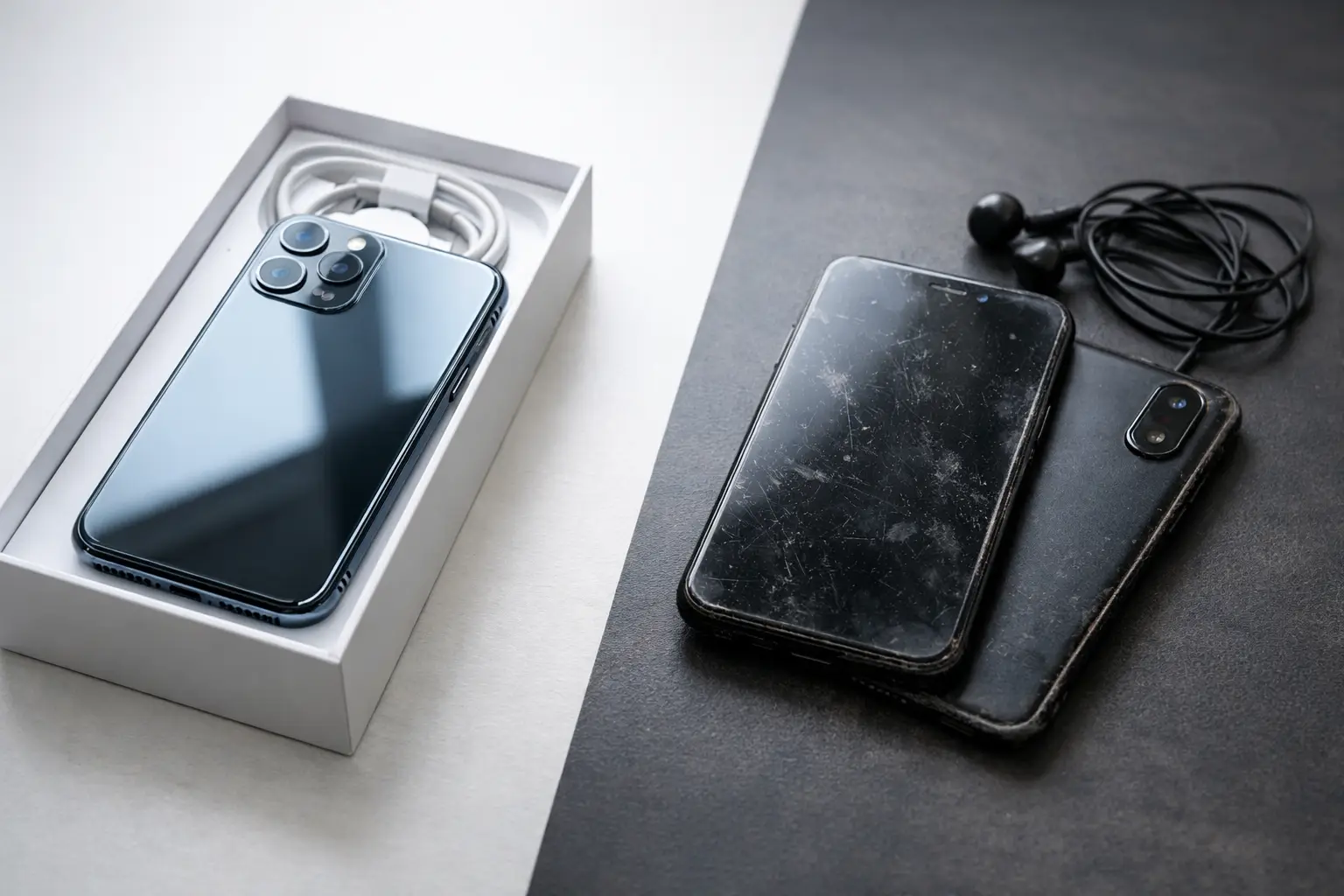
A low phone price can feel like a win until the battery dies at lunch, the camera will not focus, or the device turns out to be locked to a carrier you do not use. When comparing refurbished versus used smartphones, the real question is not simply which costs less. It is what has been checked, what is included, and how much risk you are willing to take on.
For many St. Charles and St. Louis-area shoppers, a pre-owned phone is the smart way to get a dependable iPhone or Samsung Galaxy without paying new-device pricing. But “used” and “refurbished” are not interchangeable terms. Knowing the difference helps you spend your money on a phone that fits your needs instead of a problem you have to repair next week.
Refurbished Versus Used Smartphones: The Core Difference
A used smartphone is generally sold in its current condition. The previous owner, a private seller, trade-in business, or marketplace may wipe the phone and confirm that it powers on, but the level of inspection can vary widely. The screen may have faint scratches, the charging port may be loose, the battery may be worn down, or a previous repair may have used lower-quality parts. None of those issues are guaranteed, but they are possible.
A refurbished smartphone has been evaluated before resale. Depending on the seller, that process can include testing core functions, cleaning the device, replacing failed or worn components, restoring software, confirming the phone can activate, and checking its cosmetic condition. A properly refurbished phone is prepared for its next owner rather than simply passed along as-is.
That does not mean every refurbished device looks brand new. A phone can have light cosmetic wear and still be a strong value. What matters is that its key functions have been inspected and that you know the condition you are buying.
What You Are Really Paying For
The biggest appeal of a used phone is the sticker price. Private sellers can often list devices for less because they are not paying for testing, repairs, customer support, or a warranty. If you know how to inspect phones, need a low-cost backup device, and can handle an unexpected repair, buying used can make sense.
Refurbished phones usually cost more than an as-is used phone because someone has put time and parts into getting it ready for resale. That added cost may cover diagnostics, restoration, cleaning, software setup, functional testing, and warranty coverage. You are paying for fewer unknowns.
Think of it this way: two iPhones of the same model can look nearly identical in a listing photo. One may have a weak battery, an unreliable charging port, and no return option. The other may have been inspected and sold with support if something is wrong. The lower price is not always the lower total cost.
Condition labels matter
A trustworthy seller should clearly describe the phone’s condition. Terms such as excellent, good, fair, or grade A can be useful, but they are not universal standards. Ask what the label means. Does it describe only the appearance, or has the phone been tested for performance as well?
Cosmetic wear is often easy to live with. A small mark on the frame may save you money without affecting how the phone works. Functional problems are different. A device with Face ID issues, poor microphone performance, random restarts, or a damaged display can become expensive quickly.
The Checks That Make Refurbished Phones Safer
A refurbished device is only as good as the inspection behind it. Before buying, ask what was tested and whether any parts were replaced. You do not need a technical checklist with every component named, but the seller should be able to explain their process clearly.
Core tests should include the display and touch response, cameras, speakers, microphones, charging, buttons, Wi-Fi, Bluetooth, cellular connectivity, and biometric features when applicable. The device should also be checked for activation locks and account locks. A phone that cannot be activated on your carrier is not a bargain.
Battery health deserves special attention. All lithium-ion batteries wear down over time. A used device may still work well with an older battery, especially if you use it lightly or keep a charger nearby. But if you need your phone for work, school pickups, navigation, and daily communication, weak battery performance is more than an inconvenience.
Refurbishment may involve replacing a battery when needed, but do not assume it automatically does. Ask about battery condition and whether the phone has been tested for normal charging and runtime. Clear answers are a good sign that the seller stands behind the device.
Warranty and Return Support Change the Equation
A warranty is one of the clearest advantages of buying refurbished from a professional seller. Electronics can develop issues even after careful testing. The difference is what happens next.
With a private used-phone sale, you may have no recourse after money changes hands. A seller may say the phone worked when they handed it over, and you may be responsible for any repair from that point forward. That risk can be acceptable for a very inexpensive device, but it should be part of your decision.
With a refurbished phone from a reputable local business, you have a place to call or visit if there is a problem. That matters when you depend on your device every day. Mr. Mobile sells certified pre-owned unlocked phones with inspection, setup support, and warranty coverage, giving local shoppers a practical alternative to gambling on an unfamiliar online listing.
Before you buy, confirm the warranty length, what it covers, and the return policy. Physical damage from a new drop is usually not covered, but hardware issues that appear shortly after purchase should be addressed under clear terms.
Carrier Compatibility Is Not a Small Detail
A phone can be in great physical condition and still be the wrong purchase if it will not work on your service. Carrier-locked phones are tied to a specific network until they are properly unlocked. Some can be unlocked later, but that depends on the carrier and the device’s payment status.
An unlocked phone gives you more flexibility. You can bring it to a compatible carrier, switch providers later, or use it while traveling with the right service plan. For families with different carriers or shoppers moving from one provider to another, this can save a lot of frustration.
Ask the seller whether the phone is unlocked and confirm compatibility with your carrier before paying. Also check that the phone has not been reported lost or stolen and that it is eligible for activation. A professional seller should be prepared to help you verify these basics.
When a Used Phone Is the Right Choice
Used does not automatically mean bad. It can be the right move when the savings are substantial and your needs are simple. Maybe you need a starter phone for a child, a temporary replacement while your main phone is being repaired, or a spare device for music, messaging, and Wi-Fi use.
It can also work well when you can inspect the device in person. Test the touchscreen across the full display, make a call, try the cameras, plug in a charger, check the speakers, and connect to Wi-Fi. Look closely for screen lifting, cracks around the frame, moisture damage, and warning messages in the settings.
Still, leave room in your budget for the possibility of repairs. A cheap used phone with a failing screen or battery can stop being cheap once you need parts and labor.
When Refurbished Is Worth the Extra Cost
Refurbished is usually the better fit when your phone needs to be dependable from day one. That includes busy parents, students who rely on apps and online coursework, professionals who cannot miss calls, and anyone replacing a phone after a sudden break.
It is also a stronger choice if you are not comfortable evaluating a device yourself. Most people should not have to know how to spot a damaged charging port or verify whether a repair was completed correctly. A good refurbisher has already done that work and can explain the phone’s condition without vague promises.
The best value is not always the newest model. A refurbished iPhone or Samsung Galaxy that is one or two generations older can deliver excellent performance, a capable camera, current app support, and a much more manageable price. Choose based on battery life, storage, camera needs, screen size, and how long you expect to keep it.
A Better Way to Buy Pre-Owned
Before making your choice, compare more than the listed price. Ask about condition, testing, battery health, unlocked status, warranty, and returns. If a seller cannot answer basic questions or pressures you to pay quickly, walk away.
A pre-owned phone should make life easier, not create another errand. Whether you choose a carefully inspected refurbished model or a low-cost used device, buy with clear expectations and enough support behind the phone to keep you connected when it matters.